

Quick answer
Stop, stay calm, and back away slowly while speaking in a low voice — never run. Alaska's bear country around Homer is open at all hours, entry costs 0 USD, and the recommended arrival window of 06:00–10:00 offers higher visibility with lower bear activity levels. Distance is the whole answer; give the animal an unobstructed route away from you.
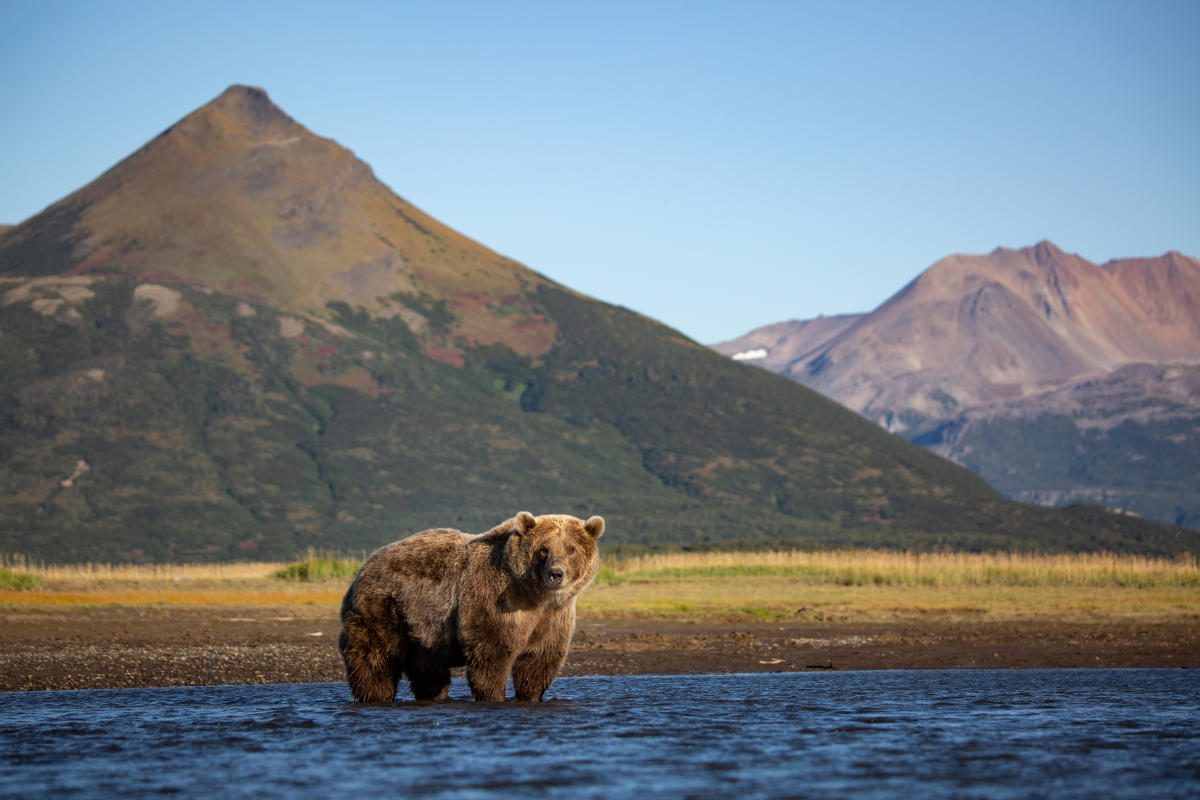
Alaska holds roughly 98 percent of the United States' brown bear population, and the Kenai Peninsula sits inside that range. Around Homer, bears move through salmon streams, berry slopes above the Spit, and the tidal flats fringing Kachemak Bay. A sighting is not an emergency by default. Most encounters end with the bear leaving first, because a bear that has detected a human usually wants nothing further. Knowing what to do if you see a bear in alaska is less about crisis response and more about not converting a calm animal into a defensive one. The context matters. Coastal brown bears in this region feed heavily and predictably: sedge meadows in early season, salmon runs at midsummer, berries into autumn. A bear absorbed in feeding is a bear with an agenda that does not include you. The problems begin when a person appears suddenly at close range, blocks a travel corridor, or stands between a sow and her cubs. This is why the Alaska Department of Fish and Game frames bear country conduct as a public safety practice rather than a set of park rules — the land is free to enter, unfenced, and open around the clock. Homer bear viewing operators fly clients across the bay to Katmai and Lake Clark for exactly this reason: on those flats, guides manage the distance so guests never have to. Apply the answer by planning for visibility rather than reaction. Open ground, wind at your back, and noise on brushy trails all reduce the chance of a surprise meeting. Bear spray belongs on a hip belt, not inside a pack. Food, fish, and scented gear stay sealed and away from camp. Anyone hiking Homer's alder-choked ridges should assume the bear hears them long before they see it, and should behave accordingly. Travelling in a group of three or more sharply lowers incident rates across Alaska bear safety records. For visitors who want the animals without the improvisation, guided Kachemak Bay flights and Homer bear viewing tours put trained eyes between the group and the wildlife, with fixed viewing positions and enforced distances. Reading a what to do if you see a bear in alaska guide before arriving still pays off, because the walk from the lodge to the dock crosses the same country the bears do. The rules do not change with the ticket.
“A bear that has detected a human usually wants nothing further — the response is distance, not speed.”
Essential Steps: What to Do If You See a Bear in Alaska
This procedure covers the moment you spot a bear on a trail, beach, or roadside near Homer until the animal has moved on or you have withdrawn safely — usually two to ten minutes of deliberate, unhurried action. Working through the steps in order keeps distance open and prevents the bear from treating you as either prey or a threat.
Stop and stay calm
Halt where you are, keep your feet planted, and breathe steadily instead of reacting to the first surge of adrenaline. The common error is a startled backward jump or a shout, both of which read as sudden movement and can trigger a bear that had not yet decided anything.
Identify brown or black
Look at the shoulder hump, the face profile, and the ear size rather than the fur colour, which varies widely in Alaska. People misjudge this constantly because a cinnamon-coloured black bear and a dark brown bear look identical at a glance, and the response to a charge differs between the two species.
Read the bear's behaviour
Note whether it has seen you, whether cubs are nearby, and whether it is feeding on a salmon or carcass. Watching for jaw-popping, huffing, or a lowered head matters more than the distance number, and a bear standing on its hind legs is gathering scent, not preparing to attack.
Speak in a low voice
Talk steadily so the bear identifies you as human, saying anything at a normal conversational pitch. Silence and high-pitched screaming both fail here — silence leaves a surprised bear guessing, and shrieking mimics a wounded animal.
Ready your bear spray
Pull the canister from its chest or hip holster, remove the safety clip, and hold it at waist height with your thumb on the trigger. Spray buried in a backpack is useless, and a headwind means you aim lower and closer than you expect.
Back away diagonally
Retreat slowly at an angle while keeping the bear in view, giving it a clear escape route in the opposite direction. Never turn your back, never run, and never climb a tree, since both black and brown bears outrun and outclimb any person.
Deploy spray if charged
If the bear closes inside roughly nine metres, discharge a two-second burst aimed slightly downward to build a cloud between you. Most people fire far too early and empty the canister before the bear is in range, leaving nothing for the moment it matters.
Report the encounter locally
Once clear, tell the Alaska Department of Fish and Game or the trailhead office what you saw and where. Details on a sow with cubs or a food-conditioned bear near town help the next group avoid the same spot — guidance is published at https://www.adfg.alaska.gov/index.cfm?adfg=livingwithbears.main.
Avoid These Common Mistakes If You See a Bear in Alaska
Most bear incidents near Homer trace back to a handful of predictable human errors, not aggressive animals. These are the behaviors that turn a distant sighting into a close encounter.
Turning your back and running from a bear
Never run — a bear can outsprint you and running can trigger a chase response. Stay facing the animal and back away slowly at an angle.
Climbing a tree to escape
Black bears climb well and brown bears can reach higher than you expect. Stay on the ground and keep an unobstructed retreat path open.
Feeding a bear or leaving food out
Never offer food, and store all snacks, fish, and scented items in sealed containers or a vehicle. A bear that associates people with food is usually destroyed later.
Approaching for a closer photo
Use a telephoto lens and keep the widest distance the terrain allows. Cubs, carcasses, and salmon streams are the highest-risk places to close the gap.
Hiking quietly in dense brush or alders
Talk, clap, or call out regularly so bears hear you coming. Surprise at short range causes most defensive charges.
Assuming a distant bear has not noticed you
Check for ears, head lifts, or a change in direction before moving. Consult https://www.adfg.alaska.gov/index.cfm?adfg=livingwithbears.main for current regional guidance.
Safety Rules for What to Do If You See a Bear in Alaska
In and around Homer, bears and people share the same trails, beaches and berry patches, so conduct is a shared responsibility rather than a personal preference. Habituating a bear to human food usually ends with the bear destroyed, which makes everyday etiquette the part visitors control.
Do
- Travel in groups of three or more and stay together
- Talk or call out steadily on brushy trails and blind corners
- Store food, trash and scented items in bear-resistant containers
- Carry bear spray accessible on a hip or chest holster
- Keep dogs leashed and under control at all times
- Give any bear a wide berth and yield the trail
Don't
- Never leave food, coolers or fish scraps unattended outdoors
- Do not approach a bear for photographs, drone footage or video
- Avoid wearing headphones or moving silently through dense cover
- Never feed a bear or leave scraps to draw one closer
- Do not camp, cook or sleep near salmon streams and trails
- Do not run ahead of your group or hike alone at dusk
Timing and Bear Activity: What to Do If You See a Bear in Alaska
The best arrival window for bear safety and visibility in Homer is 06:00–10:00. During these early morning hours, bear activity levels are generally lower and human visibility is higher.
Early Morning (06:00–10:00)
Low density—
This period offers higher visibility and lower bear activity. Plan outdoor activities to coincide with this timeframe.
Spring (April–May)
Moderate40°F to 50°F
Bears emerge from hibernation seeking food. Exercise extreme caution as they are active and hungry.
Summer (June–August)
High55°F to 65°F
Salmon runs draw bears to streams. Be vigilant as bears focus on feeding during this peak season.
Fall (September–October)
Low40°F to 50°F
Bears forage intensely for winter hibernation. Maintain distance and awareness during this final active phase.
Verdict: The optimal time to visit is during the early morning hours of 06:00–10:00 throughout the active season.
Cost of Safety: What to Do If You See a Bear in Alaska
Bear safety in Alaska is treated as a public service to ensure visitor well-being in wild areas. Consequently, there are no admission fees for accessing information or educational resources regarding bear encounters.
A typical adult pays 0 USD, as bear safety information is provided at no cost to the public.
Access to Information: What to Do If You See a Bear in Alaska
Information regarding bear safety practices in Homer is available continuously to support visitor awareness. Access these agency resources at any time throughout the week.
| Monday | 00:00–23:59 | |
|---|---|---|
| Tuesday | 00:00–23:59 | |
| Wednesday | 00:00–23:59 | |
| Thursday | 00:00–23:59 | |
| Friday | 00:00–23:59 | |
| Saturday | 00:00–23:59 | |
| Sunday | 00:00–23:59 |
Check availability
Frequently Asked Questions: Encountering Bears in Homer
Everything you need to know about what to do if you see a bear in alaska