

Quick answer
Entry to Homer is free at 0 USD, but bear viewing itself happens across Cook Inlet and requires a paid commercial flight operator. The main destinations are Katmai National Park's coastal meadows, Lake Clark National Park at Chinitna Bay and Silver Salmon Creek, and Hallo Bay. Departures cluster in the 06:00-10:00 window, when inlet weather is most stable.
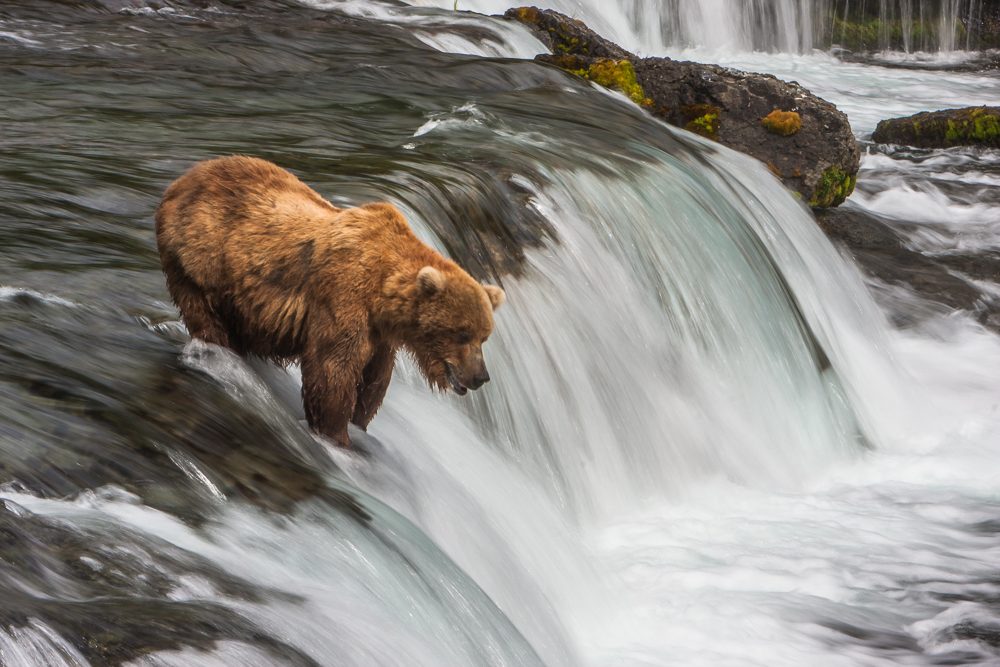
Homer has no resident bear population worth chasing. The town sits on the Kenai Peninsula's southern edge, and the animals that draw visitors here live 80 to 100 miles west, on the far shore of Cook Inlet, in country reachable only by floatplane or wheeled aircraft on a tidal beach. That geography is the single most useful thing a first-time visitor can understand about where to see bears in homer alaska: the answer is never a road, a trail, or a viewing platform within town limits. The destinations across the water are specific and well-established. Katmai National Park and Preserve holds the largest coastal brown bear density in the world, concentrated around Hallo Bay, Geographic Harbor and Kukak Bay, where bears dig clams at low tide and graze sedge flats in early summer. Lake Clark National Park sits closer, and its two best-known grounds — Chinitna Bay and Silver Salmon Creek — are the standard half-day run from Homer's airport and the Beluga Lake floatplane base. Sows with cubs are common at both. By late summer, salmon streams pull animals off the sedge and onto the gravel, changing what a group is likely to watch. Operators running Homer bear viewing tours choose the destination on the morning of the flight, based on tide tables, cloud ceiling and where guides reported activity the previous day. Weather governs everything. Cook Inlet generates fog, low ceilings and crosswinds with little warning, and a flight that departs clean can still turn back. This is why experienced visitors treat a single-day attempt as a coin flip and build two or three open days into a Homer itinerary rather than one. It is also why departures skew early, before the afternoon marine layer thickens. What this means practically: the useful question is not whether bears can be seen, but how much schedule flexibility a trip allows. Anyone researching where to see bears in homer alaska should book the flight component first and arrange the rest of the Kenai Peninsula itinerary around it — Kachemak Bay, the Homer Spit, the Pratt Museum and the halibut charters all keep, while a weather window does not. Guides carry bear spray and set viewing distances, but the animals are wild, unfenced and unhabituated to close approach. The experience is a walk on an open coastal flat, not a stop at an enclosure.
“The bears are not in Homer; Homer is simply the nearest place with an airstrip and a full fuel tank.”
The Best Time and Weather to See Bears in Homer Alaska
The prime season for bear viewing in Homer spans from June through September, when salmon runs draw bears to the coastline. Early morning arrivals between 06:00–10:00 are recommended to capitalize on stable weather patterns and higher wildlife activity.
June
Moderate crowdsCool, 45°F–60°F
Bears begin congregating near stream mouths as salmon return to spawn.
July and August
High crowdsMild, 50°F–65°F
This period offers peak bear activity and the most consistent success rates for sightings.
September
Low crowdsChilly, 40°F–55°F
Bears focus on feeding before hibernation, providing opportunities to observe them in cooler temperatures.
Early Morning
——
Best arrival window: 06:00–10:00 for stable weather and optimal wildlife activity across the inlet.
Verdict: The most effective window for bear viewing is July or August, specifically arriving during the 06:00–10:00 timeframe to ensure the best weather conditions.
Understanding Costs Where to See Bears in Homer Alaska
Homer itself has no entrance fee for visitors. Bear viewing costs are determined exclusively by the commercial tour operators providing the required air travel and guide services.
While city access is free, visitors should anticipate costs for commercial air-based bear viewing tours, which vary based on the specific operator and destination.
How to Reach Locations Where to See Bears in Homer Alaska
Bear viewing locations are situated across the Kachemak Bay in remote areas of Katmai National Park or Lake Clark National Park. Accessing these wilderness sites from Homer requires travel by small aircraft.
Sterling Highway to Homer Airport (HOA)
Homer Harbor to remote coastal drop-off points
Homer Airport (HOA) via commercial air taxi
A Step-by-Step Guide for Where to See Bears in Homer Alaska
This sequence takes you from choosing a bear viewing operator to standing on the tarmac in Homer on departure morning, and most visitors complete it over several weeks of planning plus one early start on the day itself. Homer itself is free to enter and accessible around the clock, but the flights across Cook Inlet run on fixed departure times set by each operator.
Research licensed bear operators
Compare the flight services and guided outfits that run day trips from Homer across Cook Inlet to Katmai, Lake Clark and the Kenai coast. The common mistake is assuming every operator flies to the same place — landing sites, group sizes and time on the ground vary widely, so read the itinerary rather than the headline.
Check permits and guide status
Confirm the operator holds current federal permits for the area it flies into and provides a guide who stays with the group on the ground. Booking an unpermitted or unguided flight is the error that ends trips at the ranger station.
Reserve your flight date
Contact your chosen operator through the booking pages on this site and hold a specific departure date well ahead of your travel. People routinely leave this until they arrive in Homer and find the season's dates already full.
Build in spare days
Schedule at least one flexible day either side of your booked flight, because these departures are weather-dependent and cancellations are routine rather than exceptional. Travellers who book a flight for the morning of their onward journey usually lose the trip entirely.
Prepare your gear the night before
Lay out layered waterproof clothing, footwear you can walk in through mud, and camera equipment packed within the weight limit your operator sets. Bags assembled on the morning are the ones that arrive missing something.
Confirm the day before
Call or message the operator the evening beforehand for the weather call and your exact reporting time and location. Assuming the original schedule still stands is the most frequent cause of a missed departure.
Arrive early on departure day
Reach the airfield or harbour within the 06:00–10:00 window; early morning flights are best for stable weather and optimal wildlife activity across the inlet. Homer has no entry fee and is open at all hours, so nothing stops you arriving with time to spare for the safety briefing and boarding.
Safety Rules for Where to See Bears in Homer Alaska
Bear viewing across Cook Inlet happens on open coastal flats where brown bears feed within sight of small groups. Conduct here is a safety system: guides read bear behaviour continuously, and one person breaking formation changes how a bear reads the whole group.
Do
- Stay within arm's reach of your guide at all times
- Move as a tight group, never spreading across the flats
- Speak in low, level voices so bears track your position
- Keep the guide's stated distance, even when a bear approaches
- Wear muted greens, browns and greys rather than bright colours
- Follow immediate instructions to sit, stand still, or retreat
Don't
- Never step between a sow and her cubs
- Do not run, crouch suddenly, or make abrupt arm movements
- Skip drones entirely — they are prohibited and provoke defensive behaviour
- Leave food, wrappers and scented items sealed on the aircraft
- Avoid flash photography and long lens changes during close encounters
- Do not linger for a better frame once your guide moves
Preparation Checklist for Where to See Bears in Homer Alaska
Bear viewing from Homer runs on small aircraft and tidal flats, so preparation happens in stages from weeks out to the morning of departure.
-
Reserve your flight weeks ahead — Small-aircraft operators fill quickly and carry only a handful of passengers per trip.
-
Carry government-issued photo ID — Air taxi operators verify passenger identity before boarding.
-
Confirm your body weight honestly — Pilots calculate load and balance for every seat on a light aircraft.
-
Pack layered waterproof outerwear — Cook Inlet weather shifts between sun, wind and rain within a single outing.
-
Bring knee-high rubber boots — Landings are on beaches and tidal mud, and most operators require them.
-
Pack a 300mm or longer lens — Legal viewing distances keep bears far enough that short lenses record little detail.
-
Charge batteries and clear memory cards — There is no power once you leave Homer, and cold drains batteries fast.
-
Arrive between 06:00 and 10:00 — Early morning flights are best for stable weather and optimal wildlife activity across the inlet.
Check availability
Frequently asked questions about where to see bears in Homer Alaska
Everything you need to know about where to see bears in homer alaska